When a surgical wound opens, drains, breaks down, or fails to heal, the problem may be deeper than the skin.
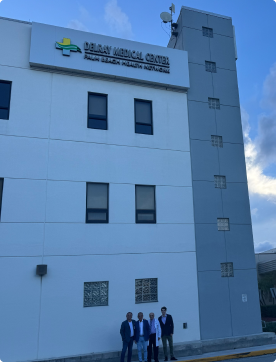
Plastic Surgery Trauma Associates evaluates postoperative wound failure through a hospital-based reconstructive framework connected to advanced wound care and Level I trauma infrastructure.
Plastic Surgery Trauma Associates evaluates postoperative wound failure through a hospital-based reconstructive framework connected to advanced wound care and Level I trauma infrastructure.
Postoperative Wound / Flap Consultation
When a Surgical Wound Fails
Postoperative wound failure is not always a dressing problem.
In selected cases, wound breakdown reflects a structural reconstructive problem involving tissue viability, dead space, wound bioburden, perfusion, tension, exposed structures, hardware, and the durability of the original closure.
A wound that appears superficial may conceal deeper failure of fascia, soft tissue coverage, fixation coverage, or the biologic environment needed for healing.
The clinical question is not only whether the skin can be closed.
The question is whether the wound can remain closed under biologic and mechanical stress.
What Postoperative Wound Failure May Look Like
Postoperative wound failure may present as:
- incision separation or dehiscence
- persistent drainage after surgery
- skin-edge necrosis
- recurrent fluid collection or seroma
- hematoma beneath a closure
- exposed tendon, bone, mesh, implant, or hardware
- open fascia or deep soft tissue failure
- infection concern or increasing wound bioburden
- failed prior closure
- wound reopening after sutures or staples are removed
- wound deterioration despite dressing care
- delayed healing after orthopedic, spine, abdominal wall, breast, oncologic, or trauma surgery
These findings should trigger careful evaluation of depth, tissue viability, mechanical stress, wound bioburden, and the need for reconstructive escalation.
Why Early Escalation Matters
PSTA frequently evaluates postoperative wounds after prolonged dressing care, repeated minor procedures, persistent drainage, or progressive tissue loss. By that point, the wound may be larger, the tissue bed less reliable, and the reconstructive sequence more difficult.
Early evaluation may allow:
- recognition of fascial or deep soft tissue failure
- assessment of tissue perfusion and viability
- control of hematoma, seroma, or dead space
- earlier debridement of nonviable tissue
- identification of exposed tendon, bone, implant, mesh, or hardware
- coordination with the operating surgeon when needed
- timely use of negative pressure therapy when appropriate
- planned flap or soft tissue reconstruction before options are lost
The goal is to prevent a manageable postoperative wound problem from becoming a prolonged wound-care course or a larger reconstructive failure.
A Reconstructive Approach, Not Routine Wound Care Alone
Postoperative wound failure requires a different level of analysis when the wound is deep, recurrent, draining, mechanically stressed, or associated with exposed structures.
PSTA evaluates postoperative wound failure through reconstructive principles:
- what tissue has failed
- what structures are exposed or threatened
- whether fascia or deep closure has opened
- whether dead space is driving drainage or infection risk
- whether local perfusion can support healing
- whether wound bioburden requires operative control
- whether the closure is under excessive tension
- whether flap coverage or staged reconstruction is needed
- whether the original operation must be coordinated with a specialty surgeon
The objective is durable closure, not temporary coverage.
Open Fascia, Exposed Structures, and Hardware
When fascia is open or hardware is exposed, the problem has moved beyond simple skin healing.
Exposed tendon, bone, mesh, implant, or orthopedic/spinal hardware creates a higher-risk reconstructive environment. The treatment plan must account for wound bioburden, hardware stability, tissue viability, dead space, perfusion, and the mechanical forces placed on the closure during daily activity.
In selected cases, management may require operative debridement and washout of the prior surgical site, staged negative pressure therapy, and later definitive vascularized tissue coverage.
For exposed or threatened spine hardware, PSTA often uses a staged protocol that may include debridement and washout of the previous surgical site and hardware, placement of Veraflo negative pressure therapy for no less than 72 hours with saline or Dakin’s solution when clinically appropriate, and planned return to the operating room for plastic surgery muscle flap closure.
The purpose of muscle flap coverage is to bring vascularized, blood-flow-bearing tissue directly over the compromised area so antibiotics and the patient’s immune system can reach the wound bed more effectively. The reconstruction is designed to withstand the stresses placed across the wound during activities of daily living.
This same reconstructive logic may also be used prophylactically in selected high-risk primary or revision cases when wound-failure risk is elevated.
Common Postoperative Wound Failure Scenarios
Consultation may be appropriate after:
- spine surgery with persistent drainage or wound breakdown
- orthopedic surgery with exposed bone, fixation, or hardware
- revision surgery with poor soft tissue coverage
- trauma surgery followed by dehiscence or tissue necrosis
- oncologic resection with failed closure or irradiated tissue
- abdominal wall surgery with open fascia or mesh exposure
- breast or chest wall surgery with skin flap compromise
- wounds in diabetic, malnourished, immunosuppressed, anticoagulated, or geriatric patients
- repeated wound reopening despite closure attempts
- wounds that are not improving despite appropriate basic care
The earlier the reconstructive problem is recognized, the more options may remain available.
Postoperative Spine Wound Failure
Postoperative spine wound failure deserves specific attention because instrumentation, deep dead space, fascial disruption, and wound bioburden can place the entire spine reconstruction at risk.
Persistent drainage, open fascia, exposed hardware, recurrent seroma, or infection concern should be evaluated as a combined soft tissue and mechanical problem.
Plastic surgery addresses durable soft tissue coverage. Spine surgery addresses instrumentation stability, fusion status, and mechanical decision-making. Both perspectives matter.
When the closure environment is high risk from the outset, planned flap closure may be considered during the index or revision operation to reduce dead space, bring vascularized tissue to the surgical bed, and support a more durable soft tissue envelope.
Postoperative Orthopedic Wound Failure
Orthopedic postoperative wounds may fail when fixation, bone, tendon, or implant material is exposed or threatened.
In these cases, the reconstructive plan must account for skeletal stability, infection risk, wound bioburden, exposed hardware, tissue viability, and the need for durable soft tissue coverage.
Dressing care alone may be insufficient when critical structures are exposed or when the wound repeatedly fails under mechanical stress.
Advanced Wound Care Within a Level I Trauma Environment
Postoperative wound failure may begin as an outpatient concern, but not every failed wound is an office-based problem.
Some wounds require operating room access, anesthesia support, inpatient monitoring, specialty-surgeon coordination, infection-risk management, staged negative pressure therapy, and flap reconstruction.
Plastic Surgery Trauma Associates evaluates postoperative wound failure through an advanced wound and hospital-based reconstructive pathway connected to Level I trauma infrastructure.
When to Request Consultation
Professional referral may be appropriate for:
- persistent postoperative drainage
- wound separation or dehiscence
- black, dusky, or necrotic wound edges
- open fascia
- exposed tendon, bone, mesh, implant, or hardware
- recurrent seroma or hematoma
- infection concern with tissue compromise
- failed prior closure
- postoperative wound in irradiated or scarred tissue
- postoperative wound in geriatric or medically fragile patients
- wound not improving despite standard care
- need for flap coverage or staged reconstruction
Early consultation preserves reconstructive options. Delay narrows them.
Professional Referral
PostoperativeWoundFailure.com is a focused educational and referral landing page maintained by Plastic Surgery Trauma Associates.
For professional referral, postoperative wound consultation, flap coverage evaluation, or reconstructive salvage review:
Postoperative Wound / Flap Consultation
For urgent hospital transfer or trauma-system escalation:
Tenet Transfer Center 855-952-7246
Available 24/7
For full trauma reconstruction program information, visit reconstructivetrauma.com.
FAQ
Postoperative wound failure occurs when a surgical wound opens, drains, breaks down, develops tissue compromise, or fails to heal as expected after surgery.
Not always. When the wound is deep, draining, recurrent, associated with open fascia, or involves exposed tendon, bone, mesh, implant, or hardware, it may require reconstructive evaluation rather than dressing care alone.
Plastic surgery consultation may be appropriate when there is wound separation, persistent drainage, necrotic tissue, exposed structures, open fascia, failed closure, or concern that durable soft tissue coverage may be needed.
Exposed hardware means that orthopedic, spinal, or other implanted material is no longer adequately covered by viable soft tissue. This may increase infection risk and usually requires coordinated surgical evaluation.
Early escalation can identify tissue viability, dead space, wound bioburden, exposed structures, and the need for staged reconstruction before the wound becomes larger or reconstructive options narrow.
Flap coverage uses vascularized tissue, often muscle or soft tissue, to provide durable coverage over exposed or threatened structures and to improve the biologic environment of the wound bed.